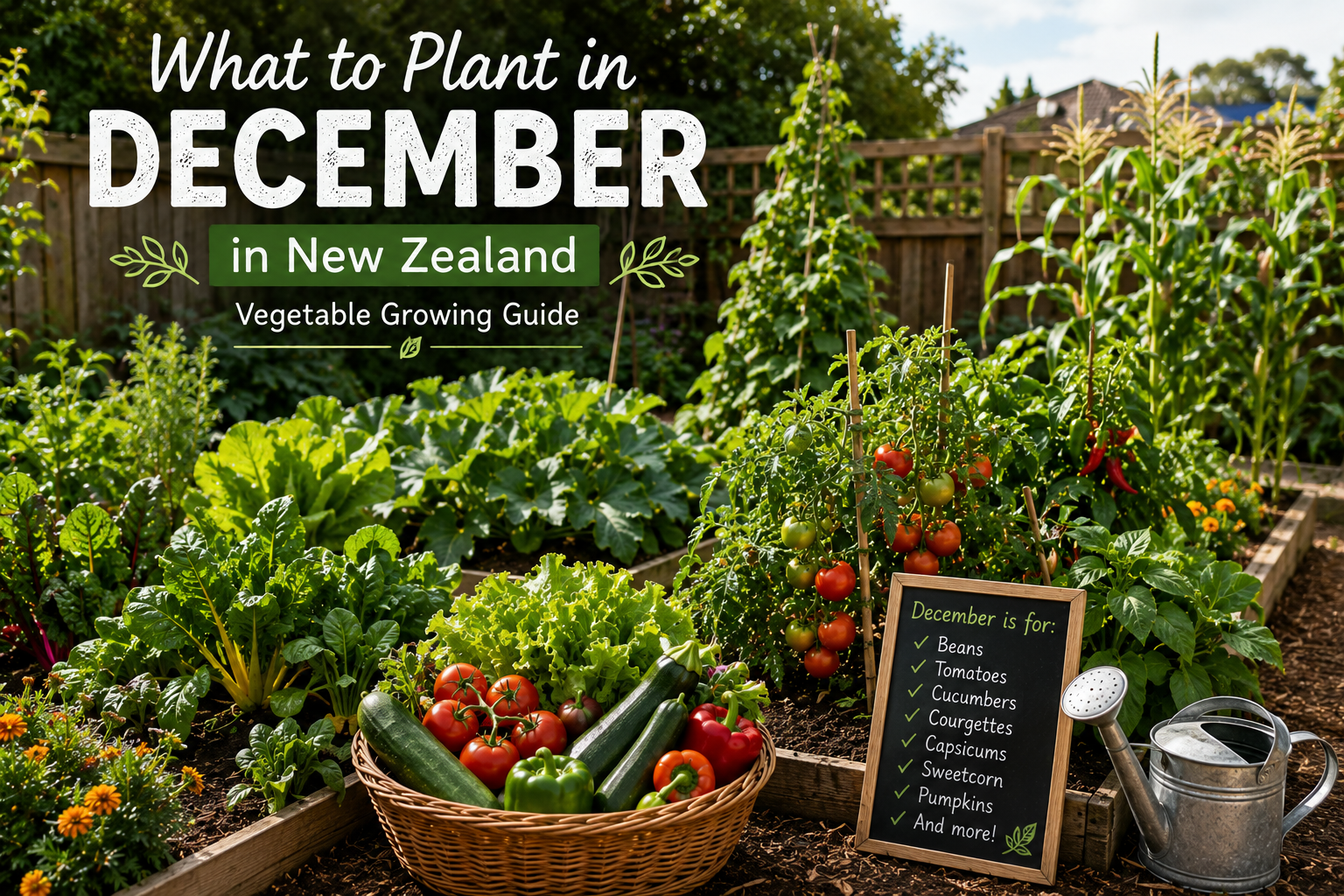
What to Plant in December in New Zealand: Vegetable & Seed Growing Guide

December marks the beginning of summer in New Zealand.
Longer days, warmer soil and rising temperatures mean vegetable gardens can grow incredibly quickly at this time of year.
Tomatoes are beginning to flower and produce fruit, beans are climbing, courgettes are growing rapidly and cucumbers, pumpkins, capsicums, chillies and sweetcorn are settling into their summer growing season.
December isn’t only about looking after vegetables you’ve already planted.
There are still plenty of vegetable seeds you can sow throughout the month to keep your garden productive through summer and into autumn.
New Zealand’s climate varies considerably, so exactly what you can sow depends on where you live, the variety you’re growing and the conditions in your own garden.
What Vegetables Can You Sow in December in New Zealand?
December offers plenty of planting opportunities.
Depending on your local climate and the particular variety you’re growing, vegetables that can be sown or planted during December include:
- Beans
- Beetroot
- Broccoli
- Cabbage
- Capsicums
- Carrots
- Cauliflower
- Celery
- Chillies
- Cucumbers
- Courgettes
- Eggplants
- Lettuce
- Parsnips
- Pumpkins and squash
- Radishes
- Silverbeet
- Spinach
- Spring onions
- Sweetcorn
- Tomatoes
December is also a great time to continue growing herbs such as basil.
Warm-season vegetables generally thrive during this period, but increasing temperatures mean watering and soil moisture become increasingly important.

Seeds to Sow Directly Outside in December
Warm soil means many vegetables can be sown directly into the garden during December.
Beans
Beans are an excellent summer crop.
Once the soil is warm, seeds can be sown directly where the plants will grow.
Both dwarf and climbing beans are suitable for home vegetable gardens.
Dwarf beans form relatively compact plants, while climbing beans need strong supports such as trellises, stakes or netting.
Beans can also be succession sown.
Instead of planting all your seeds at once, another sowing later can help extend your harvest.
Carrots
Carrots can continue to be direct sown during December.
Prepare the soil so it is loose and free from large stones and clumps.
Carrot seeds are small and the surface of the soil can dry quickly during summer, so pay particular attention to moisture while seeds are germinating.
Regular smaller sowings can help provide carrots over a longer period.
Beetroot
Beetroot is another useful vegetable for summer sowing.
Seeds can be sown directly into garden beds or suitable containers.
Succession sowing smaller quantities every few weeks can help prevent your entire crop becoming ready at once.
Radishes
Radishes can be grown quickly and don’t require a huge amount of space.
However, hot weather can affect quality.
Keep plants adequately watered and consider giving them some protection from the strongest afternoon heat in particularly hot gardens.
Regular small sowings are generally more useful than planting an entire packet at once.
Lettuce
Lettuce can still be grown during summer, but increasing temperatures can make it more challenging.
Choose varieties suited to warmer conditions where possible.
Keep plants consistently watered and, in hot locations, consider growing lettuce where it receives morning sun and some protection from intense afternoon heat.
Succession sowing small quantities regularly can help provide fresh leaves over a longer period.
Spring Onions
Spring onions are an excellent crop for regular sowing.
They don’t require much garden space and can also grow well in containers.
Sow small amounts regularly if you want a continuing supply.
Silverbeet
Silverbeet can remain productive throughout summer with adequate water.
Harvest larger outer leaves while allowing the centre of the plant to continue growing.
Regular harvesting can encourage continued production.

Summer Vegetables to Grow in December
December is prime growing time for many of New Zealand’s favourite summer vegetables.
Depending on your local conditions, these can include:
- Tomatoes
- Beans
- Capsicums
- Chillies
- Cucumbers
- Courgettes
- Pumpkins
- Squash
- Sweetcorn
- Eggplants
Most of these crops need plenty of sunshine and consistent access to water during active summer growth.
Growing Tomatoes in December
Tomato plants can grow extremely quickly during December.
By now, many plants established earlier in spring will be flowering and beginning to produce fruit.
Keep tomato plants supported as they grow.
Check ties regularly to make sure they aren’t cutting into expanding stems.
Plants growing in containers need particular attention to watering because pots can dry out rapidly during warm and windy weather.
Try to keep soil moisture reasonably consistent rather than allowing plants to become extremely dry before giving them large amounts of water.
Can You Still Sow Tomato Seeds in December?
Tomato seeds can germinate readily in warm December conditions, but starting tomatoes this late gives plants less time to mature and produce ripe fruit before cooler autumn conditions arrive.
Whether a December sowing is worthwhile depends heavily on your location and the variety.
Gardeners in warmer areas with a long growing season have more opportunity than gardeners in cooler southern or inland locations.
If you want tomatoes this summer and haven’t started any yet, established seedlings may provide a faster option.
Growing Capsicums and Chillies in December
Capsicums and chillies enjoy summer warmth.
Plants established during spring should begin putting on plenty of growth as temperatures rise.
Give them a sunny, sheltered position and keep them adequately watered.
Both crops can also perform well in suitably sized containers.
Container-grown plants may need much more frequent watering than plants growing in garden soil.
Growing Cucumbers in December
December is a fantastic month for cucumbers.
Seeds can be direct sown into warm soil, or established seedlings can be planted into the garden.
Cucumbers appreciate consistent moisture.
Some varieties can be trained vertically onto trellises or other supports.
Vertical growing can save space and make cucumbers easier to find when harvesting.
Pick cucumbers regularly once plants begin producing.
Growing Courgettes in December
Courgettes can become incredibly productive during summer.
Seeds can be sown directly into warm soil, and established plants may already be producing heavily by December.
Check plants frequently.
A small courgette can become very large surprisingly quickly during warm weather.
Regular harvesting can also encourage plants to continue producing.
Growing Pumpkins and Squash in December
Pumpkins and squash thrive in warm summer conditions.
Seeds can be direct sown when conditions are suitable.
Give plants plenty of room because many varieties produce long, vigorous vines.
Keep them adequately watered during periods of hot or dry weather.
Before sowing, check the mature growth habit of your chosen variety so you know how much space it may require.
Growing Sweetcorn in December
Sweetcorn enjoys warm soil, sunshine and summer temperatures.
December is a good month for sowing sweetcorn in many New Zealand gardens.
Where possible, plant sweetcorn in a block consisting of several shorter rows rather than one long single row.
Sweetcorn relies on wind pollination, and growing plants together can help pollen reach neighbouring plants.
Consistent watering becomes particularly important as plants grow and cobs begin developing.
Growing Eggplants in December
Eggplants are among the most heat-loving vegetables in the summer garden.
They perform best in warm, sunny and sheltered conditions.
December can provide excellent growing conditions in warmer parts of New Zealand.
In cooler locations, choose the warmest and most sheltered position available.
Eggplants can also be grown in suitable containers.
Grow Basil With Your Summer Vegetables
Basil loves summer warmth and is a great companion for the summer vegetable garden.
It can be grown in garden beds or containers.
Regularly harvesting leaves can encourage plants to produce fresh growth.
Basil also pairs perfectly in the kitchen with home-grown tomatoes, making the two crops a popular combination in summer gardens.
Keep Succession Sowing
One of the easiest ways to keep a vegetable garden productive is to avoid planting everything at once.
During December, consider making smaller repeat sowings of suitable crops such as:
- Beans
- Beetroot
- Carrots
- Lettuce
- Radishes
- Spring onions
When one crop finishes, use the available space for another sowing.
This can help keep your garden producing instead of having everything ready at the same time.
Watering the Vegetable Garden in December
Watering becomes one of the most important garden jobs as summer begins.
Exactly how often you need to water depends on:
- Temperature
- Rainfall
- Wind
- Soil type
- Plant size
- Whether plants are in containers or garden beds
Rather than only wetting the soil surface, water established vegetables thoroughly enough for moisture to reach the root zone.
Newly germinating seeds need more frequent attention because their roots are still close to the surface.
Containers may need checking every day during particularly hot or windy conditions.
Mulch to Protect Your Soil
Mulching can become particularly useful during December.
A suitable layer of mulch around established vegetables can help reduce evaporation and slow weed growth.
Water dry soil before applying mulch.
Keep mulch slightly away from the stems of vegetable plants rather than piling it directly around them.
Harvest Vegetables Regularly
December isn’t just planting season.
It’s also harvest season.
Depending on when you planted, you may already be picking:
- Lettuce
- Radishes
- Silverbeet
- Spring onions
- Beans
- Courgettes
- Cucumbers
- Early tomatoes
Check productive plants regularly.
Beans, cucumbers and courgettes can develop very quickly during warm weather.
Regular harvesting can also encourage some plants to continue producing.
Keep Checking for Summer Pests
Warm weather can increase pest activity.
Regularly inspect your vegetable garden and look underneath leaves where pests can be easy to miss.
Watch for:
- Aphids
- Caterpillars
- White butterfly eggs and caterpillars
- Slugs
- Snails
- Whiteflies
Healthy plants can still experience pest problems, so regular checks are worthwhile.
Finding a small problem early is generally easier than dealing with a large infestation later.
Your December Vegetable Garden
December is when months of spring preparation begin turning into a productive summer garden.
Tomatoes are growing, beans are climbing, cucumbers and courgettes are producing vigorous growth and sweetcorn is reaching towards the summer sun.
At the same time, continuing to sow smaller amounts of carrots, beetroot, lettuce, spring onions and other suitable vegetables can help provide future harvests.
Keep watering, mulching, harvesting and planting.
A little regular attention throughout December can help keep your vegetable garden productive for the rest of summer.

December Planting in Different Parts of New Zealand
December marks the beginning of summer, but growing conditions still vary considerably across New Zealand.
Warmer northern and coastal gardens can experience very different conditions from cooler inland, elevated and southern gardens.
Rainfall, wind, shelter, soil type and local microclimates can also make a big difference.
This means there isn’t one December planting calendar that works perfectly for every New Zealand garden.
Use your local conditions and the instructions for the particular seed variety you’re growing to decide what is suitable for your garden.
Warmer Areas of New Zealand
By December, warmer parts of New Zealand are usually well into the summer vegetable growing season.
This can include parts of Northland, Auckland, Bay of Plenty, Gisborne and other warm, sheltered locations.
Depending on your local conditions and the varieties you’re growing, December planting options can include:
- Beans
- Beetroot
- Capsicums
- Carrots
- Chillies
- Cucumbers
- Courgettes
- Eggplants
- Lettuce
- Pumpkins and squash
- Radishes
- Silverbeet
- Spring onions
- Sweetcorn
- Tomatoes
Basil and other suitable summer herbs can also grow strongly.
In warm areas, the challenge during December can shift from protecting vegetables from cold to protecting them from heat and dry soil.
Keep a close eye on soil moisture, particularly around seedlings and container-grown plants.
Leafy vegetables such as lettuce can appreciate some protection from intense afternoon heat.
Temperate Areas
Many parts of New Zealand experience excellent vegetable-growing conditions during December.
Days are warm and long, providing plenty of opportunities to establish and maintain summer crops.
Depending on your local conditions, vegetables you can grow or sow can include:
- Beans
- Beetroot
- Carrots
- Capsicums
- Chillies
- Cucumbers
- Courgettes
- Lettuce
- Pumpkins and squash
- Radishes
- Silverbeet
- Spring onions
- Sweetcorn
- Tomatoes
Other crops can also be suitable depending on the particular variety and local climate.
December is a good time to continue succession sowing while looking after summer vegetables already established in the garden.
Cooler, Southern and Inland Areas
Summer arrives later in some cooler parts of New Zealand, but December still brings a significant increase in planting opportunities.
This can include colder inland locations, elevated gardens and cooler southern areas.
Depending on your local conditions, December crops can include:
- Beans
- Beetroot
- Broccoli
- Cabbage
- Carrots
- Cauliflower
- Celery
- Cucumbers
- Courgettes
- Lettuce
- Parsnips
- Radishes
- Silverbeet
- Spring onions
- Sweetcorn
- Tomatoes
Warmth-loving crops such as capsicums, chillies, eggplants, pumpkins and squash can also be grown where summer conditions are suitable.
Choose the warmest, sunniest and most sheltered parts of the garden for heat-loving vegetables.
Local conditions are more important than simply whether you live in the North or South Island.
A sheltered coastal South Island garden can have very different conditions from a frost-prone inland garden.
December Vegetable Seed-Sowing Guide
The following table provides a general starting point for December vegetable sowing in New Zealand.
Always check the instructions for your particular seed variety and adjust for your local conditions.
| Vegetable | Sow in December? | General Starting Method |
|---|---|---|
| Beans | Yes | Direct sow |
| Beetroot | Yes | Direct sow |
| Broccoli | Variety and climate dependent | Direct sow or start in trays |
| Cabbage | Variety and climate dependent | Direct sow or start in trays |
| Capsicums | Yes, particularly in warmer areas | Sow or transplant in warm conditions |
| Carrots | Yes | Direct sow |
| Cauliflower | Variety and climate dependent | Direct sow or start in trays |
| Celery | Yes in suitable areas | Start in trays or sow as directed for the variety |
| Chillies | Yes, particularly in warmer areas | Sow or transplant in warm conditions |
| Cucumbers | Yes | Direct sow in warm soil |
| Courgettes | Yes | Direct sow in warm soil |
| Eggplants | Yes in warm conditions | Sow or transplant |
| Lettuce | Yes | Direct sow or start in trays |
| Parsnips | Yes in suitable areas | Direct sow |
| Pumpkins and squash | Yes | Direct sow in warm soil |
| Radishes | Yes | Direct sow |
| Silverbeet | Yes | Direct sow or start in trays |
| Spring onions | Yes | Direct sow |
| Sweetcorn | Yes | Direct sow |
| Tomatoes | Yes, but later sowings have a shorter season | Sow seed or transplant seedlings |
Think About What You’ll Harvest Later
December is a good time to think beyond what you want to harvest immediately.
Vegetables sown now will mature at different times.
Fast-growing crops may be ready relatively quickly, while others will continue developing through summer and into autumn.
Before filling every empty space, think about:
- How much room the mature plant needs
- How long it may occupy the garden
- What you already have growing
- How much your household is likely to eat
- What you may want to plant later in summer
Planning ahead can help keep the garden productive without overcrowding it.
Don’t Stop Sowing Because Summer Has Arrived
It’s easy to think all vegetable planting needs to happen during spring.
It doesn’t.
December is still a useful sowing month for many crops.
Instead of thinking of your vegetable garden as something you plant once, treat it as an ongoing cycle.
Harvest a crop.
Prepare the empty space.
Sow something new.
Regular smaller sowings can keep fresh vegetables coming for much longer than one large spring planting.

Growing Vegetables in Pots in December
Container gardening is a great option during summer.
A sunny deck, courtyard, balcony or patio can provide enough room for a useful selection of vegetables and herbs.
Suitable options can include:
- Lettuce
- Radishes
- Spring onions
- Silverbeet
- Basil
- Dwarf beans
- Chillies
- Capsicums
- Tomatoes
The container needs to suit the mature size of the plant.
Large tomato plants need considerably more soil and root space than lettuce or radishes.
Always use containers with adequate drainage.
Container Gardens Need Extra Attention in Summer
The biggest challenge with container vegetables during December is often water.
Containers can dry out much faster than garden beds.
Dark containers in full sun can become particularly warm.
Check the growing mix regularly rather than waiting until plants visibly wilt.
On hot or windy days, some containers may need much more frequent attention than they did during spring.
Mulching the surface of larger containers can also help reduce moisture loss.
Tomatoes in Containers
Tomatoes can grow very successfully in containers when they have enough space.
Choose a sufficiently large pot with good drainage and position it somewhere sunny.
Check the growth habit of the variety you’re growing.
Compact or bush tomatoes can be easier to manage in smaller spaces.
Vigorous varieties need larger containers and strong supports.
Container-grown tomatoes also depend entirely on you for water and nutrients, so regular care is important throughout summer.
Capsicums and Chillies in Containers
Capsicums and chillies are well suited to sunny container gardens.
Choose appropriately sized pots and place them somewhere warm and sheltered.
Because pots dry out quickly, monitor soil moisture during hot weather.
Plants that become repeatedly stressed by lack of water may struggle to produce well.
Grow Beans Vertically
Climbing beans are useful when garden space is limited.
Instead of spreading across valuable ground space, they can grow upwards on a trellis or other sturdy support.
Dwarf beans are another option for small gardens and larger containers.
Regularly picking beans once they begin producing can help keep plants productive.
Grow Cucumbers Vertically
Some cucumber varieties can also be trained upwards.
A strong trellis can keep vines off the ground and save garden space.
Vertical growing can also make cucumbers easier to spot when they’re ready to harvest.
Make sure the support is strong enough to carry mature vines and developing fruit.
Give Courgettes Enough Space
Courgettes may start as small seedlings, but mature plants can take up a considerable amount of room.
Avoid planting too many close together.
Good airflow around plants is useful, and giving each plant enough space makes harvesting easier.
Once fruit begins developing, check underneath the large leaves regularly.
Courgettes can grow extremely quickly during warm weather.
Plan Where Pumpkin Vines Will Grow
Pumpkins and squash can take over a vegetable garden surprisingly quickly.
Before sowing seeds, decide where the vines will be allowed to travel.
They may be able to grow along the edge of a garden, across an unused area or away from smaller vegetables.
Check the expected growth habit of your variety because some plants are considerably more vigorous than others.
Keep Sweetcorn Together
When sowing another crop of sweetcorn, plant it in a block rather than one long row where possible.
Sweetcorn relies on wind pollination.
Growing several shorter rows close together can improve the chance of pollen reaching the silks of neighbouring plants.
Give sweetcorn plenty of sun and adequate moisture during summer growth.
Make Better Use of Garden Space
By December, vegetable gardens can become crowded.
Use your available space carefully.
Vertical supports can help with climbing beans and cucumbers.
Fast-growing crops can sometimes make use of smaller gaps where they won’t compete heavily with established plants.
Containers can provide extra growing space outside your main vegetable beds.
Most importantly, remember how large plants will eventually become.
A garden that looks empty immediately after sowing can become completely full several weeks later.
Protect Leafy Vegetables From Summer Heat
Vegetables such as lettuce can struggle during periods of intense summer heat.
Hot conditions can cause some leafy vegetables to bolt or become less productive.
Where possible, grow heat-sensitive crops in locations that receive morning sun but some protection from the strongest afternoon heat.
Choose varieties suited to warmer conditions and keep plants adequately watered.
Succession sowing also means you don’t have to rely on one planting lasting throughout the entire summer.
Water Early When Possible
During hot summer weather, watering earlier in the day can be useful.
It allows plants access to moisture as temperatures rise.
Water the soil around the plants rather than unnecessarily soaking foliage.
The goal is to get moisture into the root zone.
A quick splash across the soil surface may not provide enough water for larger established vegetables.
Check Under Mulch
Mulch can help conserve moisture, but don’t assume the soil underneath is automatically wet.
Occasionally move a little mulch aside and check the soil.
This gives you a much better idea of whether plants actually need water.
Your finger can be one of the most useful tools for deciding whether soil is dry.
Feed Productive Summer Crops Appropriately
Summer vegetables can produce a huge amount of growth.
Tomatoes, cucumbers, courgettes, pumpkins and sweetcorn all need adequate nutrients.
Healthy soil prepared with compost or suitable organic matter provides a good foundation.
If you’re using fertilisers or plant foods during the growing season, follow the instructions for the particular product and crop.
More fertiliser isn’t automatically better.
Excessive feeding can create nutrient imbalances or encourage large amounts of leafy growth without necessarily improving your harvest.
Keep Harvesting
Regular harvesting is one of the easiest summer garden jobs to overlook.
Check beans, courgettes and cucumbers frequently.
Pick vegetables when they reach a suitable size rather than leaving everything on the plant indefinitely.
Harvest lettuce leaves, silverbeet and herbs as needed.
Regular harvesting can encourage continued production from many crops and prevents vegetables from becoming oversized before you notice them.
Prepare for Hotter Weather Ahead
December is only the beginning of summer.
January and February can bring much hotter and drier conditions to many New Zealand gardens.
Use December to prepare.
Mulch established plants.
Make sure watering equipment is working properly.
Check that tomatoes and climbing vegetables have strong supports.
Keep weeds under control.
Continue sowing suitable vegetables for later harvests.
A garden that is well established and cared for during December will be much better prepared for the hottest part of the New Zealand summer.

December Vegetable Garden Checklist
December can be one of the busiest months in the New Zealand vegetable garden.
Use this checklist to keep your summer garden growing and productive.
- Continue sowing suitable vegetables for later harvests.
- Sow beans into warm soil.
- Make another sowing of carrots, beetroot and spring onions.
- Sow cucumbers, courgettes and pumpkins where local conditions are suitable.
- Get sweetcorn established.
- Keep tomatoes tied securely to their supports.
- Install strong supports for climbing beans and cucumbers.
- Check newly sown seedbeds regularly for moisture.
- Water established plants deeply when required.
- Check container vegetables frequently because pots can dry out quickly.
- Mulch established vegetables to help conserve soil moisture.
- Keep weeds under control.
- Check plants regularly for pests.
- Harvest beans, cucumbers and courgettes frequently once they begin producing.
- Remove vegetables that have finished producing and use the space for another suitable crop.
- Protect heat-sensitive leafy vegetables during particularly hot weather where necessary.
- Check that pumpkin and squash vines aren’t smothering smaller plants.
- Keep planning ahead for January and the hottest part of summer.
What Vegetable Seeds Should I Sow in December?
December still offers plenty of opportunities to start vegetables from seed.
For succession sowing and future harvests, consider:
- Beans
- Beetroot
- Carrots
- Lettuce
- Radishes
- Spring onions
For summer crops, depending on your local conditions, consider:
- Cucumbers
- Courgettes
- Pumpkins and squash
- Sweetcorn
Other vegetables may also be suitable depending on your climate and the particular variety you’re growing.
Before sowing, check the seed packet and consider how much growing season the plant needs.
This becomes particularly important for long-season crops started later in summer.

Buy Vegetable Seeds Online in New Zealand
December isn’t too late to start growing vegetables.
There are still plenty of seeds you can sow for summer and future harvests.
The Seedy Collection has a range of vegetable seeds available for gardeners throughout New Zealand.
Growing vegetables from seed gives you the opportunity to choose from different varieties while producing multiple plants from a packet of seeds.
Whether you have a large backyard vegetable garden, raised beds or a collection of pots, there are plenty of vegetables you can grow this summer.
Grow Beans From Seed
Beans are a fantastic summer vegetable to grow from seed.
Once the soil is warm, seeds can be sown directly where you want the plants to grow.
Choose dwarf beans for compact plants or climbing beans if you want to make use of vertical garden space.
Climbing varieties need sturdy support.
Once plants begin producing, harvest beans regularly.
Grow Carrots From Seed
Carrots can continue to be sown throughout summer where conditions are suitable.
Because carrots are best grown where their roots won’t be disturbed, sow the seeds directly into prepared soil.
Keep the surface moist while the seeds germinate.
Smaller repeat sowings can provide carrots over a longer period rather than one large harvest.
Grow Cucumbers From Seed
Cucumbers love summer warmth.
December provides excellent conditions for growing cucumbers in many New Zealand gardens.
Seeds can be sown directly into warm soil.
Choose a sunny position and provide consistent moisture as plants develop.
Some cucumber varieties can be trained vertically, which can be particularly useful in small vegetable gardens.
Grow Courgettes From Seed
Courgettes are one of the most productive vegetables you can grow during summer.
Seeds can be sown directly into warm soil.
Give plants plenty of room because mature courgettes develop large leaves and can take up considerable garden space.
You usually don’t need many plants to produce a useful harvest.
Once courgettes begin forming, check underneath the leaves frequently and harvest regularly.
Grow Pumpkins From Seed
Pumpkins need warm conditions and plenty of space.
December can still be a suitable time to sow pumpkins in many areas, particularly where there is enough warm growing season remaining for the chosen variety.
Check the expected time to maturity and local conditions before sowing later crops.
Choose a sunny position and plan where the vines will be able to spread.
Grow Sweetcorn From Seed
Sweetcorn is another summer favourite that can be sown during December.
It needs warm soil, plenty of sunshine and adequate moisture.
Plant several shorter rows together in a block where possible rather than one long single row.
This can improve wind pollination and help cobs develop more evenly.
Frequently Asked Questions About December Planting in NZ
What vegetables can I plant in December in New Zealand?
December is the beginning of summer and there are plenty of vegetables you can grow.
Depending on your local climate and variety, options can include beans, beetroot, carrots, lettuce, radishes, silverbeet, spring onions, cucumbers, courgettes, pumpkins, sweetcorn, capsicums, chillies, eggplants and tomatoes.
Some cooler-season vegetables may also be suitable in particular regions or when suitable varieties are chosen.
What vegetable seeds can I sow directly in December?
Seeds that can be suitable for direct sowing include:
- Beans
- Beetroot
- Carrots
- Cucumbers
- Courgettes
- Lettuce
- Pumpkins
- Radishes
- Spring onions
- Sweetcorn
Always check the instructions for the variety you’re growing and adjust for your local climate.
Is December too late to plant vegetables in NZ?
No.
December is definitely not too late to plant a vegetable garden.
Many summer crops can still be sown, and succession sowing can continue throughout the season.
The important consideration is whether there is enough growing time remaining for the particular crop and variety to mature.
Is December too late to sow tomatoes in New Zealand?
Tomato seeds can still germinate during December, but plants started this late have less time to grow and ripen fruit before cooler autumn weather arrives.
December sowing is more practical in warmer areas with a long growing season.
If you haven’t started tomatoes and want fruit sooner, buying established seedlings may be a better option.
Can I sow beans in December?
Yes.
December is an excellent month for beans in many New Zealand gardens.
Beans enjoy warm soil and summer temperatures.
Both dwarf and climbing varieties can be grown.
Can I sow carrots in December?
Yes.
Carrots can continue to be direct sown during December.
Keep the seedbed consistently moist during germination because the soil surface can dry quickly during hot weather.
Can I sow cucumbers in December?
Yes.
Cucumbers thrive during warm weather and can be sown into warm soil during December.
Keep plants adequately watered and provide a support if you’re growing a climbing variety vertically.
Can I sow courgettes in December?
Yes.
Courgettes can be direct sown during December when conditions are suitable.
They grow quickly in warm weather and can become very productive.
Give plants plenty of room.
Can I sow pumpkins in December?
Pumpkins can still be sown in December where the local growing season is long enough for the chosen variety to mature.
Gardeners in cooler areas should pay particular attention to the variety’s time to maturity before making a late sowing.
Can I sow sweetcorn in December?
Yes.
Sweetcorn can be sown during December in suitable conditions.
Plant it in blocks rather than a single long row where possible to help with wind pollination.
Can I grow lettuce during December?
Yes, but hot weather can make lettuce more challenging.
Choose suitable varieties, keep plants adequately watered and consider some protection from intense afternoon heat in particularly hot locations.
Regular smaller sowings can help maintain a supply of fresh lettuce.
What vegetables can I grow in pots during December?
Plenty of vegetables can be grown in containers during summer.
Options can include:
- Lettuce
- Radishes
- Spring onions
- Silverbeet
- Dwarf beans
- Chillies
- Capsicums
- Tomatoes
Choose a container large enough for the mature plant and make sure it has good drainage.
Check container-grown vegetables regularly because pots can dry out quickly in hot or windy weather.
What Should I Plant in January?
January is the middle of summer in New Zealand.
By this stage, many vegetable gardens are producing heavily.
Tomatoes, beans, courgettes, cucumbers, capsicums and chillies can all be providing regular harvests.
But January isn’t only about harvesting.
There are still vegetables that can be sown for late-summer and autumn harvests.
As the season progresses, it also becomes important to start thinking ahead.
Instead of only planting more summer vegetables, begin considering crops that can continue producing as temperatures eventually start to cool.
Keep Your Summer Garden Productive
A productive summer vegetable garden needs regular attention.
Check your garden frequently and harvest vegetables when they’re ready.
Pick beans, courgettes and cucumbers regularly.
Tie tomato plants to their supports as they grow.
Keep containers adequately watered.
Watch for pests and signs of plant stress.
Remove weeds before they become large.
Make repeat sowings of suitable vegetables.
If a plant has finished producing, remove it and consider what could grow in its place.
Vegetable gardening doesn’t have to be a single planting event at the beginning of spring.
By continuously sowing, harvesting and replanting, you can keep your garden productive for much more of the year.
Enjoy Your December Vegetable Garden
December is one of the most rewarding times of the year in a New Zealand vegetable garden.
The plants you’ve been raising throughout spring are beginning to reward you with fresh food, while warm soil means there are still plenty of opportunities to sow more seeds.
Grow beans, carrots, beetroot, cucumbers, courgettes, pumpkins and sweetcorn.
Continue sowing smaller amounts of vegetables for future harvests.
Keep your plants watered during hot weather, mulch established beds and harvest regularly.
Most importantly, pay attention to the conditions in your own garden.
New Zealand has a wide range of climates, and successful vegetable gardening is about working with your local conditions rather than following a single planting date.
Ready to keep your summer garden growing? Browse The Seedy Collection’s range of vegetable seeds available for delivery throughout New Zealand.
What to Plant in November in New Zealand